23.4.2026
Intervista
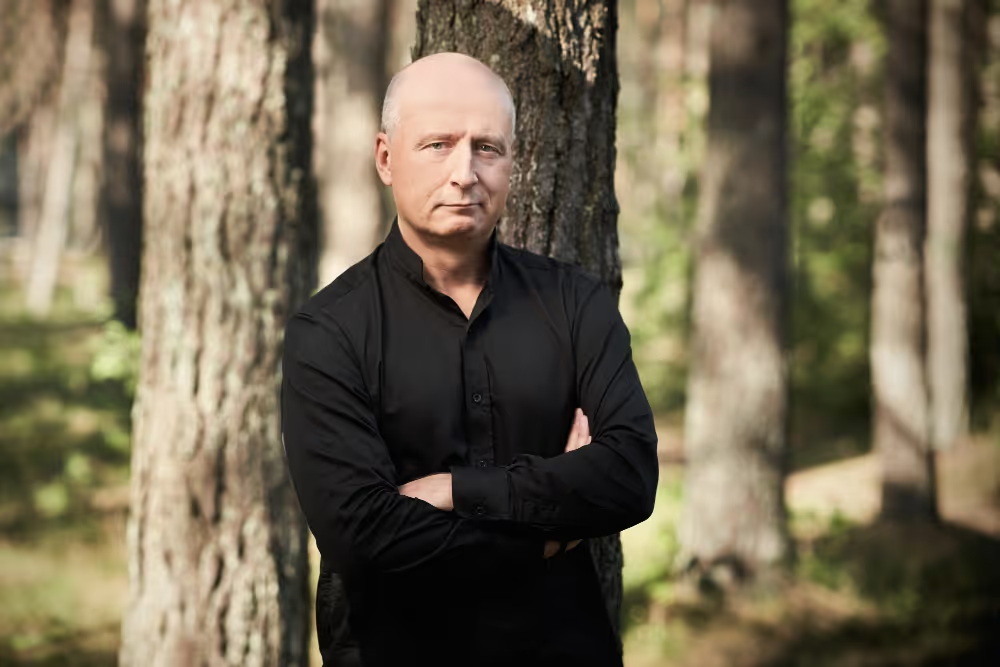
Interview with Paavo Järvi, at Teatro alla Scala with Tonhalle-Orchester Zürich for the Filarmonica Season.
Interview with the French pianist Alexandre Kantorow, who is debuting this Season with Prokofiev’s Third Concerto.

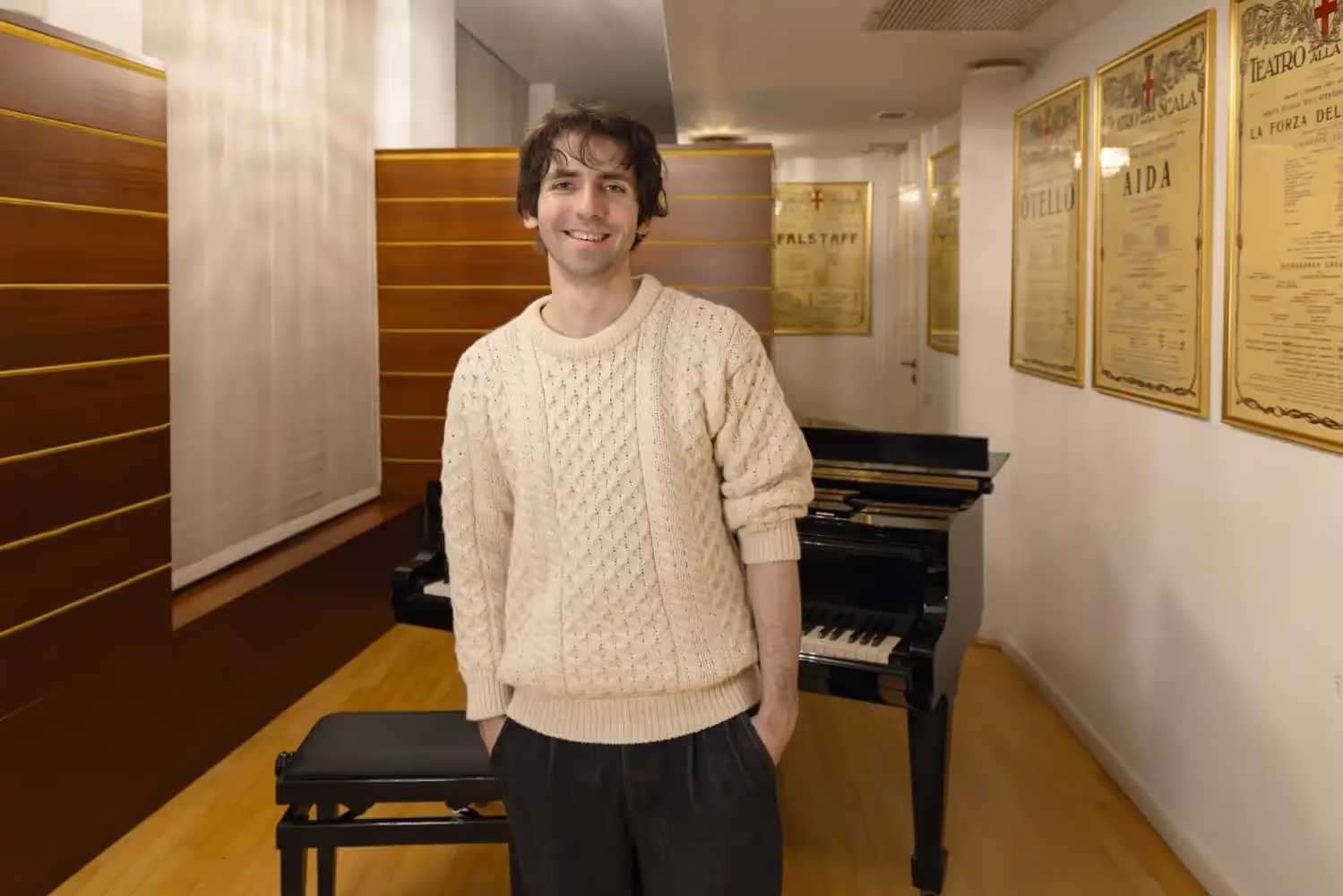
Sitting at the piano in the Red Hall of Teatro alla Scala, Alexandre Kantorow naturally tries a few passages of Prokofiev’s Third Concerto while waiting for us for the interview.
In his slightly rumpled white sweater, his hair a bit tousled, he has a spontaneous elegance – not manufactured – but deeply charming, a relaxed air despite a long week of concerts behind him and recitals in some of the continent’s most prestigious halls coming up, before again crossing Europe with the Filarmonica della Scala and Riccardo Chailly in March.
His slender hands reveal a natural theatricality as they move while he speaks in the Italian manner. Big eyes and a deep gaze, immediately open, already speak of a charismatic musician capable of moving from the most absolute concentration to the most generous conversation.
His career took off after winning the Tchaikovsky Competition in 2019 and the Gilmore Artist Award in 2023: important prizes, great orchestras, media attention.
Was there a precise moment when you thought: “Ok, now everything has changed”?
I realized it the day after the competition. I woke up in the hotel, went downstairs and my agent told me that there were lots of people who wanted to talk to me. Then he added: ‘Don’t go home to pack your bags. Let’s buy some clothes and leave on tour immediately’. It was a shock, a very strong feeling. At the same time, though, I still work with the same people as always: the same agent for years, the same record company. That makes everything very human, very warm. These are people who really know me. If I were to lose my balance, they’d be the first to bring me back to reality.
In 2019 you won the Tchaikovsky Competition, one of the most important in the world. In the years since, the political and cultural context has changed profoundly. Today how do you experience the relationship between music, Russian artists and Europe?
From a musical point of view, today many Russian artists continue to perform in Europe, and that’s fundamental. But the months immediately after the start of the war were terrible: there was an enormous emotional weight and every day situations connected to music emerged that were absurd. Many Russian friends had to relocate, separate from their families, leave everything. The war was devastating, and the Ukrainian people suffered enormously. For decades art has been a bridge. Today we really feel the absence of that dialogue. Not even during the Cold War was there such a clear cultural closure.
Many wonder why we still play Russian music.
I think it’s important to remember that many great Russian composers suffered deeply under the political system of their time. Russia has never been a peaceful country: it has a history made of tensions, difficulties, pain. From Shostakovich to Tchaikovsky, even Dostoevsky – we’re talking about artists who lived through extremely harsh conditions. It’s impossible to reduce them to symbols of a political power. My connection with this music is also personal.
I studied with Russian teachers since childhood and still do: it’s a relationship based on love for melody and a long tradition of passing on knowledge.
For me, technique and emotion are inseparable. Technique is simply the tool that allows you to create what you imagine in terms of color, time and intent. When you add musical thought, everything becomes more complex and stimulating.
At the opening ceremony of the Paris Olympics we saw you play under pouring rain — an image that went viral. Was there a moment when you thought: “I hope the piano will hold up”?
In a way, it was a real challenge. They were very prepared for the rain, they knew it was a real risk. The stage manager was in tears that morning, but everything had been very carefully planned in advance to avoid irreparable damage. There were already problems with the cameras, the dancers, even with the fire brigade. Paradoxically, the music was the last of the problems.
People often describe you as an artist with a powerful sound, but at the same time very poetic. When you open a new score, where do you start: with the head or with emotion?
For me, technique and emotion are inseparable. Technique is simply the tool that allows you to create what you imagine in terms of color, time and intention. When you add musical thought, everything becomes more complex and stimulating. I experiment a lot. I try, I try again, I search. I like to work in layers, I need time. On stage, instead, I’m very instinctive, almost impulsive.
Before music, or at least alongside music, there was astrophysics.
I'm no expert, but I'm fascinated by the big questions of science: the attempt to unify the infinitely small and the infinitely large. The closer you get to these questions, the more the sense of mystery grows. Something similar happens in music: we use very concrete instruments to tackle something that is not completely definable. It's almost a form of science transformed into art.
Is it like doing “research on a big question”? And are there any pieces that you think succeed in doing this?
If I think of a work that creates an entire world, it's Wagner's “Ring”: a vision that embraces creation and destruction, nature and consciousness.
I love those artists who interpret music with such a strong personality that they are impossible to imitate. Sofronitsky, Pletnev, and of course Rachmaninoff himself: listening to them, you receive something unique.
You grew up in a family of musicians, but your parents never forced you down this path. Did this approach help you build a personal relationship with music, or did the environment simply lead you to become who you are?
I think it was the right approach for my personality. Growing up surrounded by music had a huge influence, but the decision to really devote myself to this path was mine and it matured over time. My parents made the right choice by giving me freedom. At the same time, I listened to music, I heard my father playing, I listened to my parents talking about music and the people they knew. I can't say that it all happened ‘on its own’, but the desire to say, ‘I want to do this for myself and I want to succeed’, that did develop independently.
You studied with two great teachers, Igor Lasko and Rena Shereshevskaya, among others. What did they mean to you and what characteristics do you think you acquired from each of them.
Igor taught me discipline and a sense of interpretative responsibility. Reina, on the other hand, is a tireless researcher: very concrete on a technical level, but at the same time deeply mystical in her approach to music.
It is often said that everything begins with Bach. Do you agree with this concept?
In a certain sense, yes, because Bach created a musical logic based on the totality of tonalities, on a level of counterpoint and harmony that is the foundation of everything that came after him. Even many classical composers, when forms became simplified, returned to Bach at the end of their lives to explore this complexity again. However, classical music is only one part of written music. Alongside it existed a world of folklore and local traditions, which the great composers often integrated into their writing. Music is like a book: what we read is only a part of the real sounds that existed.
Many decisions are made on the day of the concert. These small changes keep the music alive: a different fingering at the last minute, trying out a new idea. Other times it is thanks to the encounter with the conductors. Over time, the meaning we attribute to music changes.
The younger generation of pianists today has a long tradition of performers to draw on. To what extent is the presence of the “greats” of the past a resource and to what extent a limitation? Is there anyone you feel particularly close to?
As far as performers of the past are concerned, we now have access to an extraordinary number of recordings. If you have something to say, listening to others is wonderful: every major issue in the score has been addressed in different ways. Of course, there is a risk of getting lost, of becoming a pale imitation, but small details, ideas, and insights are an incredible treasure. I love those artists who comment on music with such a strong personality that they are impossible to imitate. Sofronicky, Pletnev, and of course Rachmaninoff himself: listening to them, you receive something unique.
And is comparing yourself to the past more like trying to climb a wall to reach the top or opening a breach and crossing it?
I feel like it's asking for help from a good friend, a benevolent ghost, who gives you a little push to climb the mountain.
You often play the same masterpieces — does your interpretation of them change?
Constantly. Instruments change, acoustics change. Some things simply don’t work the same way. Sometimes the sound is drier and needs more pedal; other pianos are extremely percussive and you have to be very cautious. Many decisions are made the day of the concert. Other times it’s thanks to meeting conductors. Over time the meaning we attach to music changes: some moments we look forward to playing, then one day we change everything. Finally, every day you come on stage with a different emotional state. There are moments when you don’t feel like playing, and paradoxically, if you trust yourself, extraordinary things can happen. It’s a joy to look at a piece from different angles, to find new lights. Trying to control your mind too much is often counterproductive.”
This concert strikes an extraordinary balance between the world of folklore – Prokofiev is one of the most lyrical composers, think of Romeo and Juliet or fairy tales – and a modern, almost industrial dimension, made up of loops, trance, and mechanisms.
And where does Prokofiev's Third fit into your musical research?
It's a new piece for me, I've only been playing it for three months. There are still many things I am discovering. With a lot of music, some issues can only be resolved on stage. This concerto has an extraordinary balance between the world of folklore – Prokofiev is one of the most lyrical composers, think of Romeo and Juliet – and a modern, almost industrial dimension, made up of loops, trance, and mechanisms. It is an extremely well-balanced concerto, full of changes in character and rapid transitions. It is not an alternating dialogue between soloist and orchestra: you are always immersed together, with the orchestra constantly adding colors and ideas. It is difficult to stick to a single vision; the joy lies precisely in merging, in creating unity.
How do you experience it under your fingers and in your mind?
There is something fundamental about the rhythm. In the Second Concerto, for example, the writing is extreme: it asks you to put yourself in danger, to push yourself to the limit, with extreme dynamics and tempos. Here, on the other hand, the construction is more modular, more ritualistic. It's easy to get carried away by the speed, but I think you shouldn't give in too much. You have to let the great rhythms pulse like a heartbeat and build slowly. It's difficult, because on stage you're prone to euphoria, but this piece also requires control and depth.
Do you have any rituals before going on stage?
I usually like to listen to music before a concert, not the music I'm about to play, but something that warms up my ears or opens me up emotionally. I don't like to wait too long: I arrive about an hour early, reread the general ideas, and mentally review the score. I know that I tend to be impulsive on stage, so I need to remind myself of the crucial points of the piece, the moments of tension to get through. This puts me in the right frame of mind.
This is your first collaboration with the Filarmonica della Scala and Riccardo Chailly. What was your impression after the first rehearsal?
I was very enthusiastic. I love Chailly's recordings: he takes great care not to take refuge in easy tradition, always returning to the score, to what is written and what is not, to give the music a conscious form. He is someone who takes care of every detail. Even a concert can become routine, but with him there is a genuine commitment to the music. The orchestra has a very strong sound personality: strings with a broad, lush sound, brass ready to push the effects. You can see that they are used to making the music three-dimensional, bringing out the details of the score so that the audience can really experience them. I expect enormous energy on stage.
Interview with Paavo Järvi, at Teatro alla Scala with Tonhalle-Orchester Zürich for the Filarmonica Season.
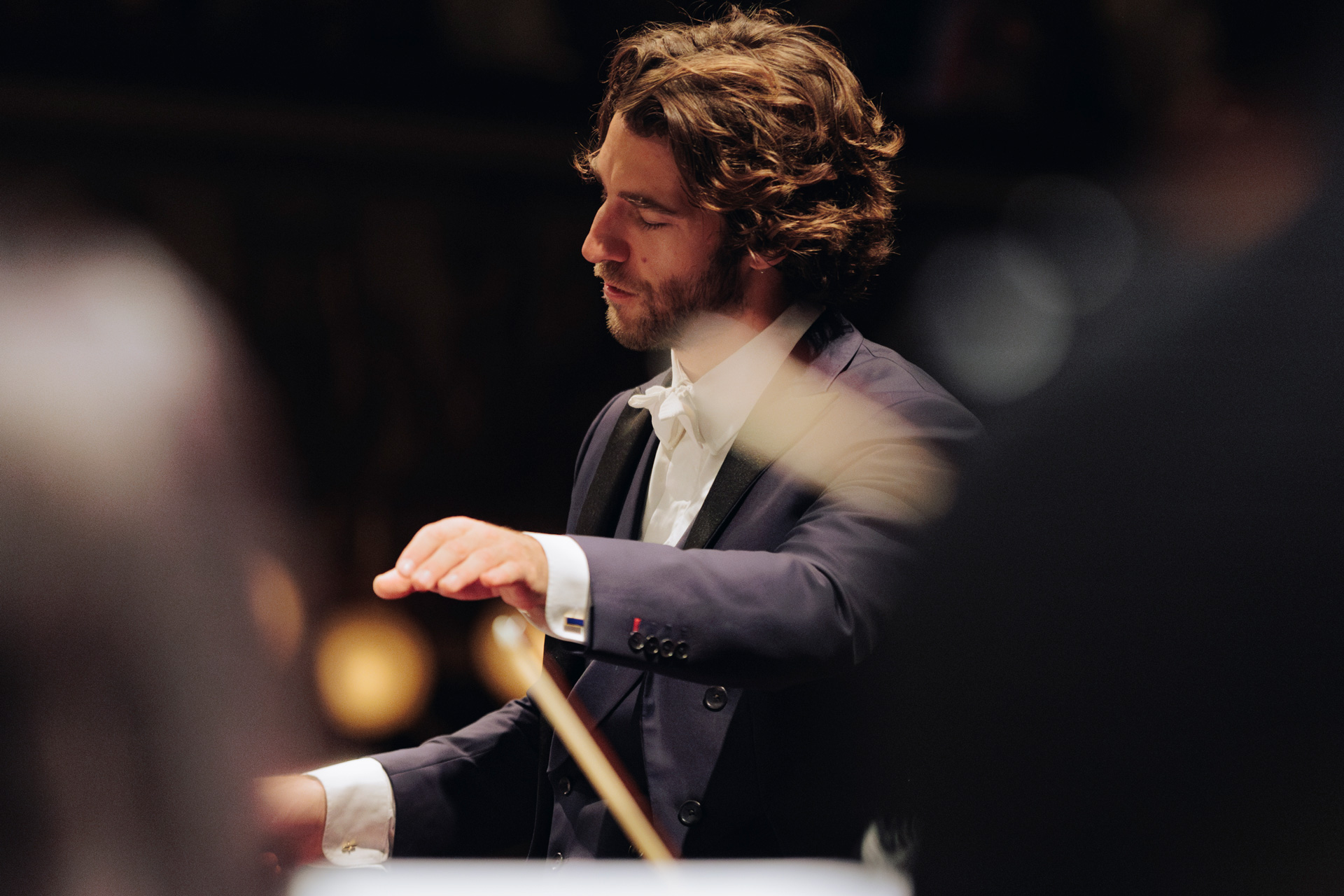
Tra eredità, passione e identità artistica, Lorenzo Viotti si racconta in occasione del concerto straordinario nel Duomo di Milano per il 160° Anniversario de Il Sole 24 Ore