
13.2.2026
Intervista
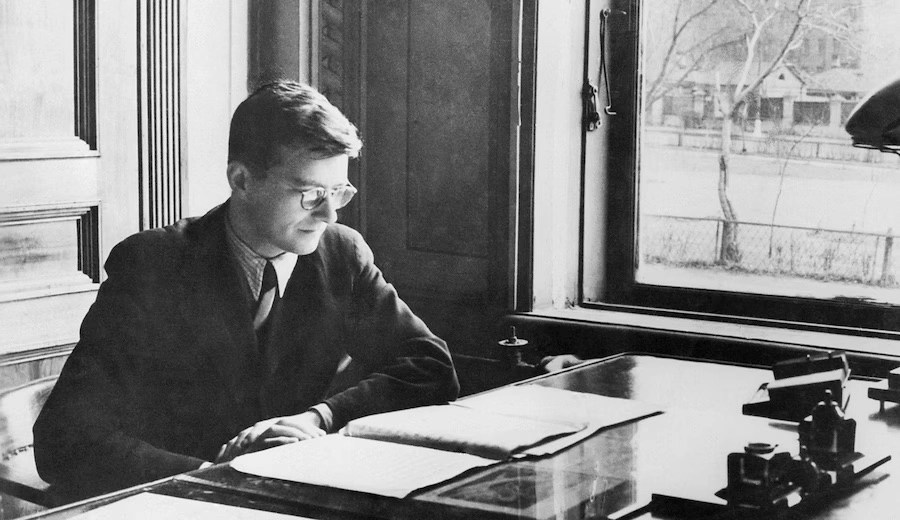
The interview with Irina Shostakovič, third wife of the great composer
Interview with Paavo Järvi, at Teatro alla Scala with Tonhalle-Orchester Zürich for the Filarmonica Season.
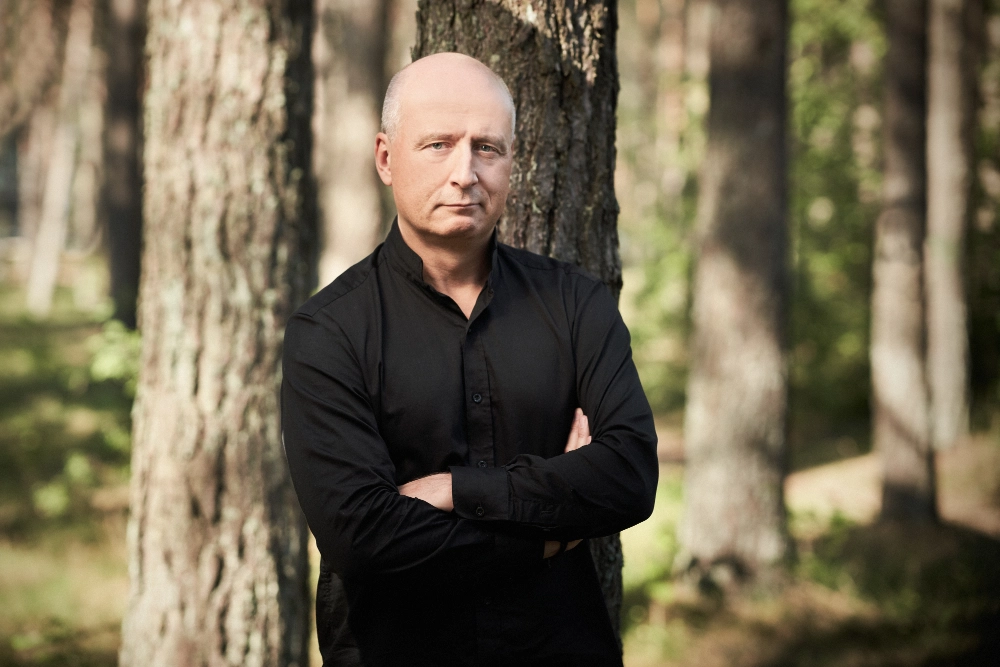
We reach Paavo Järvi by phone in Zurich, where the Estonian conductor is in the middle of a demanding run of concerts featuring music by Thomas Adès, alongside Johannes Brahms’s Violin Concerto with Janine Jansen and Felix Mendelssohn’s Scottish Symphony. The conversation moves swiftly across a wide terrain: his new appointment with the London Philharmonic Orchestra, the legacy of Dmitri Shostakovich, the cultural identity of Estonia and the enduring power of symphonic music in troubled political times. Calm, reflective and occasionally wry, Järvi speaks with the mixture of intellectual clarity and instinctive musicality that characterises his conducting.
Your new appointment with the London Philharmonic Orchestra has just been announced. Do you see it as a milestone or the start of a new chapter?
I would say it is a very natural step. The relationship with the London Philharmonic Orchestra has grown in a very organic way – musically and also humanly. When that happens, it simply feels right to deepen the collaboration. At the same time, it is not a rupture with anything else in my life. I continue my work with the Tonhalle-Orchester Zürich and with Deutsche Kammerphilharmonie Bremen, both of which remain very important to me. So perhaps it is fair to say it marks the beginning of a new journey – but one tha runs in parallel with the others.
Your relationship with the Tonhalle Orchestra has now entered its seventh year. How has that collaboration evolved?
Any meaningful artistic relationship must evolve. Either it develops or it stagnates – and stagnation is something nobody really wants. What makes music endlessly fascinating is that it is never finished. A piece we have performed ten times still has the possibility of revealing something new. That sense of forward motion is essential. Without it, the work becomes routine.

Conducting was almost inevitable for you, given your family background.
Yes, it was perhaps the most natural thing imaginable. My father, Neeme Järvi, was a conductor. My uncle was a conductor. My brother Kristjan Järvi is a conductor. In our house, music was simply the atmosphere in which we lived. We practically grew up in the opera house. My father was music director there in Estonia, and we attended rehearsals and performances constantly. So the question was never whether I would become a musician. The only question was what kind of musician.
As a child you encountered extraordinary figures – Shostakovich, Rostropovich, Khachaturian. Did those meetings shape your musical outlook?
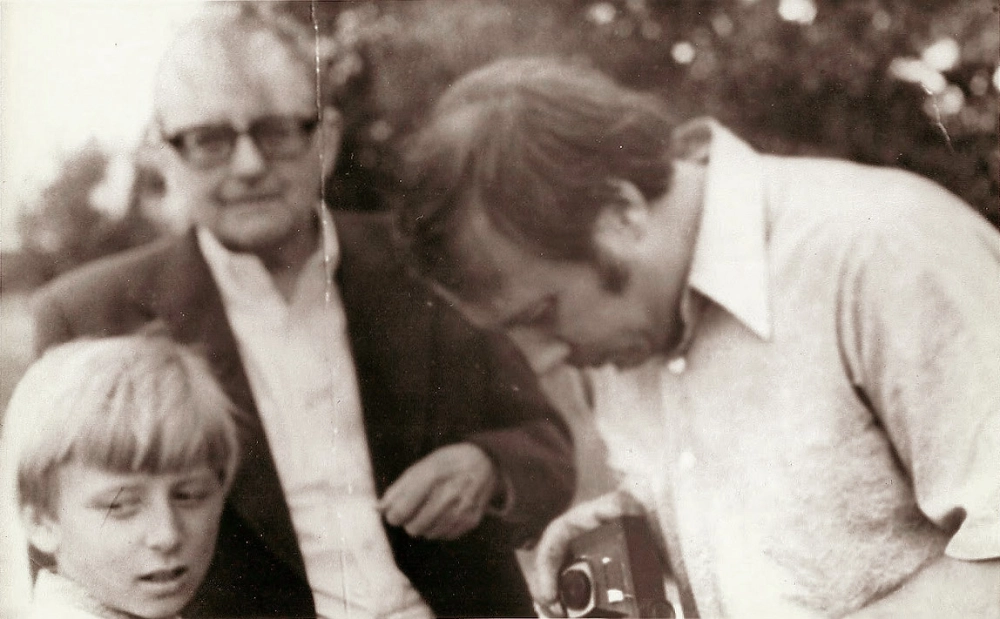
When you meet someone like Dmitri Shostakovich at the age of seven, you do not fully grasp the magnitude of the encounter. Of course it is special to remember it, and there is even a photograph of the moment. But I would not claim that my interpretation of Shostakovich is somehow more profound because of that meeting. I was simply too young. What shaped me much more was the fact that his music was everywhere in the Soviet Union. It was part of everyday musical life, and people understood that behind the notes there was a coded commentary on reality – a way of speaking about the political atmosphere without saying it directly.
Today the political landscape in Europe has again become tense. How do you see the position of Russian musicians in the West?
It is an extremely complex situation. Russian artists are not one homogeneous group. Some live in Russia and cannot leave. Some support the government and therefore find themselves unwelcome in the West. Others left precisely because they rejected the war and wanted to continue their lives elsewhere. Personally I have enormous respect for Russian culture – its contribution to music and literature is undeniable. But admiration for a culture does not mean ignoring what is happening politically. War crimes remain war crimes. One can love Sergei Rachmaninoff’s music without supporting the actions of the Russian state. The two things are not the same.
Estonia sits on the geopolitical frontier of Europe. Are you worried about the future?
Very much so. For many of us in the Baltic region, the fear that Russia might look toward Estonia is no longer hypothetical. It is a real concern. We all hope it will not happen. But when international law and borders begin to lose their meaning, the situation becomes extremely dangerous.
You have long championed Estonian composers. After Arvo Pärt, who are the voices we should be listening to?
Of course Arvo Pärt is the most famous, but there is a remarkable generation of composers: Erkki-Sven Tüür, Jüri Reinvere, Helena Tulve, among many others. For me the goal is not only to promote individual composers. It is also to promote Estonia itself – to show the world that this small country of one and a half million people has an extraordinary cultural life. When audiences hear the phrase “Estonian conductor” or “Estonian composer”, they begin to associate the country with creativity, with culture. That is important.
What makes music endlessly fascinating is that it is never finished. A piece we have performed ten times still has the possibility of revealing something new.
Your discography includes a new Mahler cycle with the Tonhalle Orchestra. Where does the project stand?
We are moving quickly. The Gustav Mahler Seventh Symphony is about to be released, and we have already recorded the Second as well. The plan is to complete the entire cycle within two years. Mahler is a composer to whom I feel incredibly close. I sometimes say I am a Mahler addict. The older I become, the more his music speaks to me.
You recently performed Tchaikovsky’s Fifth Symphony at La Scala. Do you hear the Andante cantabile as a moment of hope within the work?
Yes, absolutely. One of the miracles of Pyotr Ilyich Tchaikovsky is his melodic gift – the ability to write a line that seems to speak directly to your heart. In the Fifth Symphony, that famous horn melody in the Andante has an almost vocal quality. It feels as if someone is confiding something deeply personal to you. And within that intimacy there is indeed a sense of hope – a suggestion that even in dark circumstances there may be a light somewhere ahead.
You often work with young artists such as violinist María Dueñas or accordionist Ksenija Sidorova. How important is mentorship for you?
None of us arrives in this profession alone. Every musician had someone who opened a door, offered encouragement or created an opportunity. I was fortunate because my father was already guiding me. Later others helped me as well. It is therefore natural – and necessary – to pass that support to the next generation. But mentorship is not charity. It is about recognising something special in a young artist: a personality, a voice, an energy that deserves to be heard.

For me the goal is not only to promote individual composers. It is also to promote Estonia itself – to show the world that this small country of one and a half million people has an extraordinary cultural life.
Recently a famous actor said that opera and ballet only exist to keep alive something that no longer interests anyone. What would you say to him?
I think it was a rather unfortunate comment. But what was interesting was the reaction: the opera and ballet community responded with tremendous passion. Opera, classical music and ballet are among the highest forms of human expression. Their value is not in question. The history of humanity is told on opera stages as well. And hearing a great human voice remains one of the most extraordinary artistic experiences that exist.
Finally: will you return to conduct Filarmonica della Scala?
I very much hope so. I have wonderful memories of my last appearance there with the Filarmonica della Scala, when we performed Mahler’s Seventh Symphony. La Scala is a special place – one feels the weight of history in the hall. I would be delighted to return, and there is certainly a great deal of repertoire I would love to explore with that orchestra.
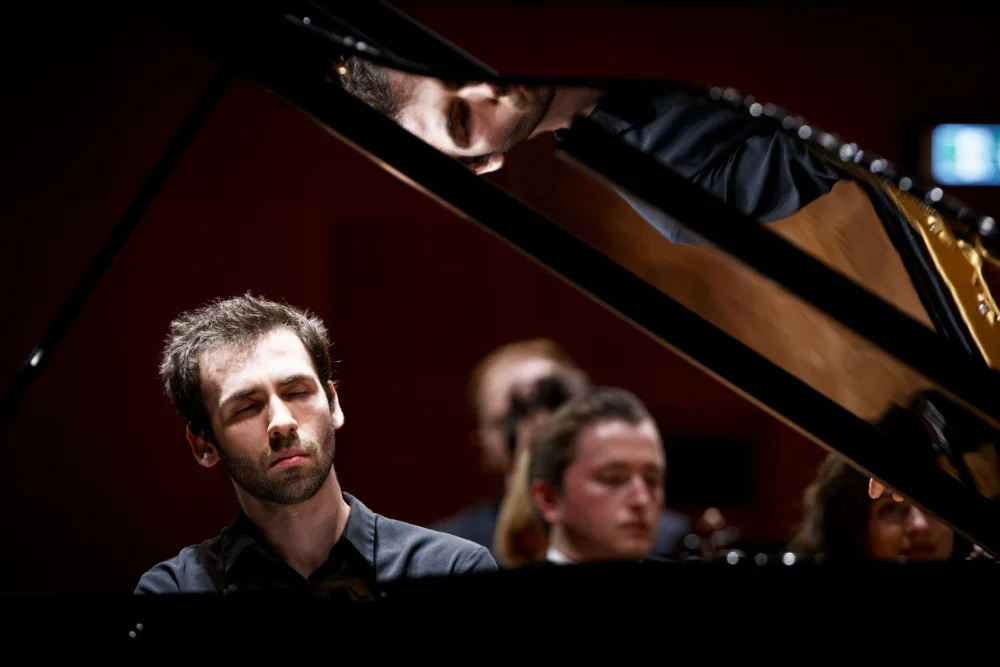
Interview with the French pianist Alexandre Kantorow, who is debuting this Season with Prokofiev’s Third Concerto.
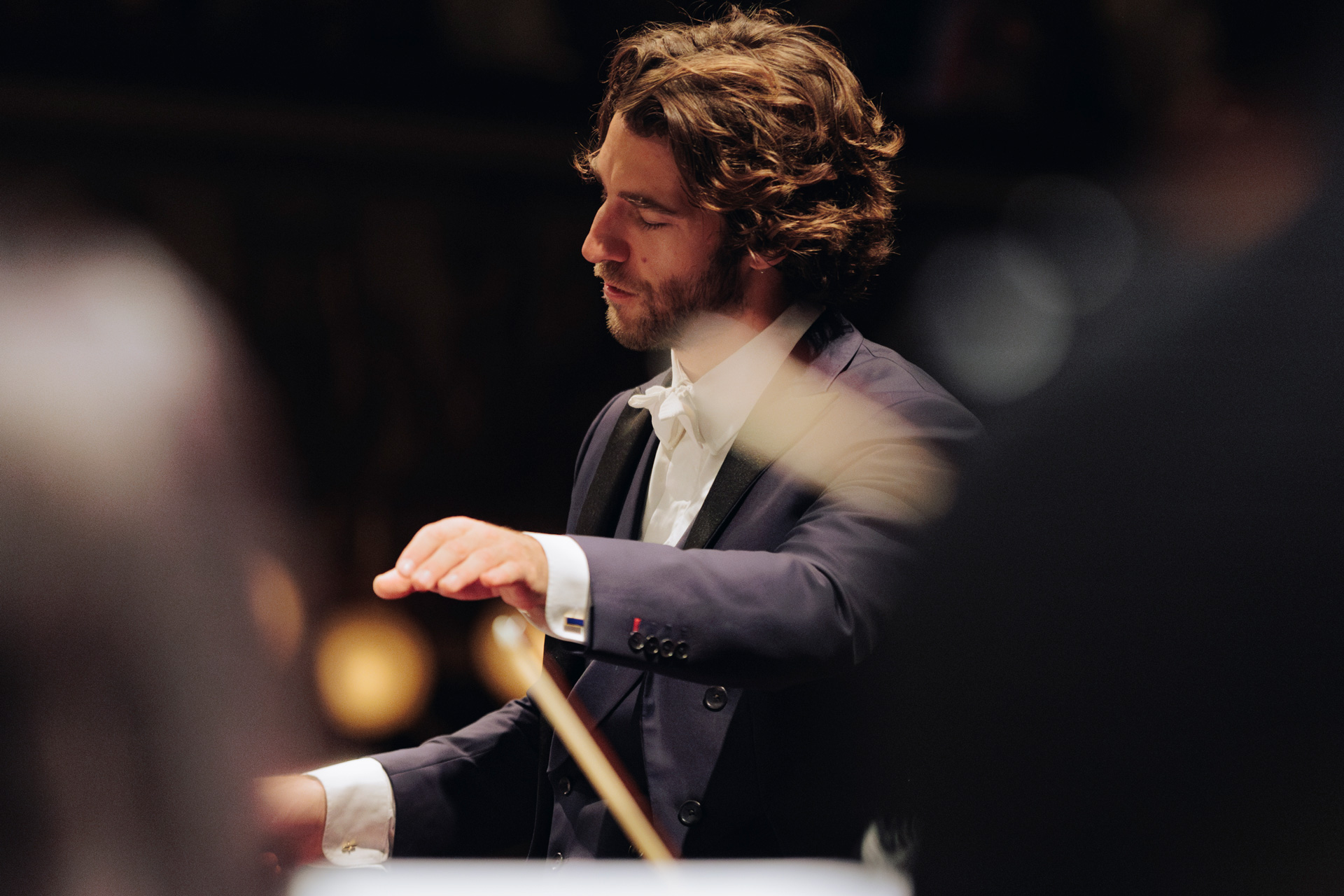
Tra eredità, passione e identità artistica, Lorenzo Viotti si racconta in occasione del concerto straordinario nel Duomo di Milano per il 160° Anniversario de Il Sole 24 Ore